What Happens When Your Darwin Lift Site Has Restricted Access: A Guide For Builders And Project Managers
Restricted access is one of the most common reasons builders and project managers assume crane hire will not work for their site. A narrow driveway, a tight suburban block, a warehouse with limited internal clearance or a yard hemmed in by existing structures — these are the conditions that seem to rule out a crane before the conversation even starts. But for many of these sites in Darwin and Palmerston, the assumption is wrong. The question is not whether crane hire in Darwin is possible, but which crane is the right fit for the site conditions.
Why Most Cranes Struggle With Restricted Access
The cranes that come to mind when most people picture a lift are large mobile cranes or truck-mounted units that require significant setup space. These machines rely on outriggers or stabilising legs to distribute their load before a lift can begin. That means they need clear, level ground extending well beyond the crane's footprint — sometimes several metres in every direction.
On a Darwin terrace subdivision where blocks are narrow and neighbouring structures are close, that setup space simply does not exist. In a commercial warehouse or industrial yard off the Stuart Highway where internal aisles are defined by racking and equipment, outrigger deployment is impractical or impossible. The result is that a conventional crane that would handle the load capacity easily cannot physically set up to do the job.
How a Franna Pick-and-Carry Crane Is Different
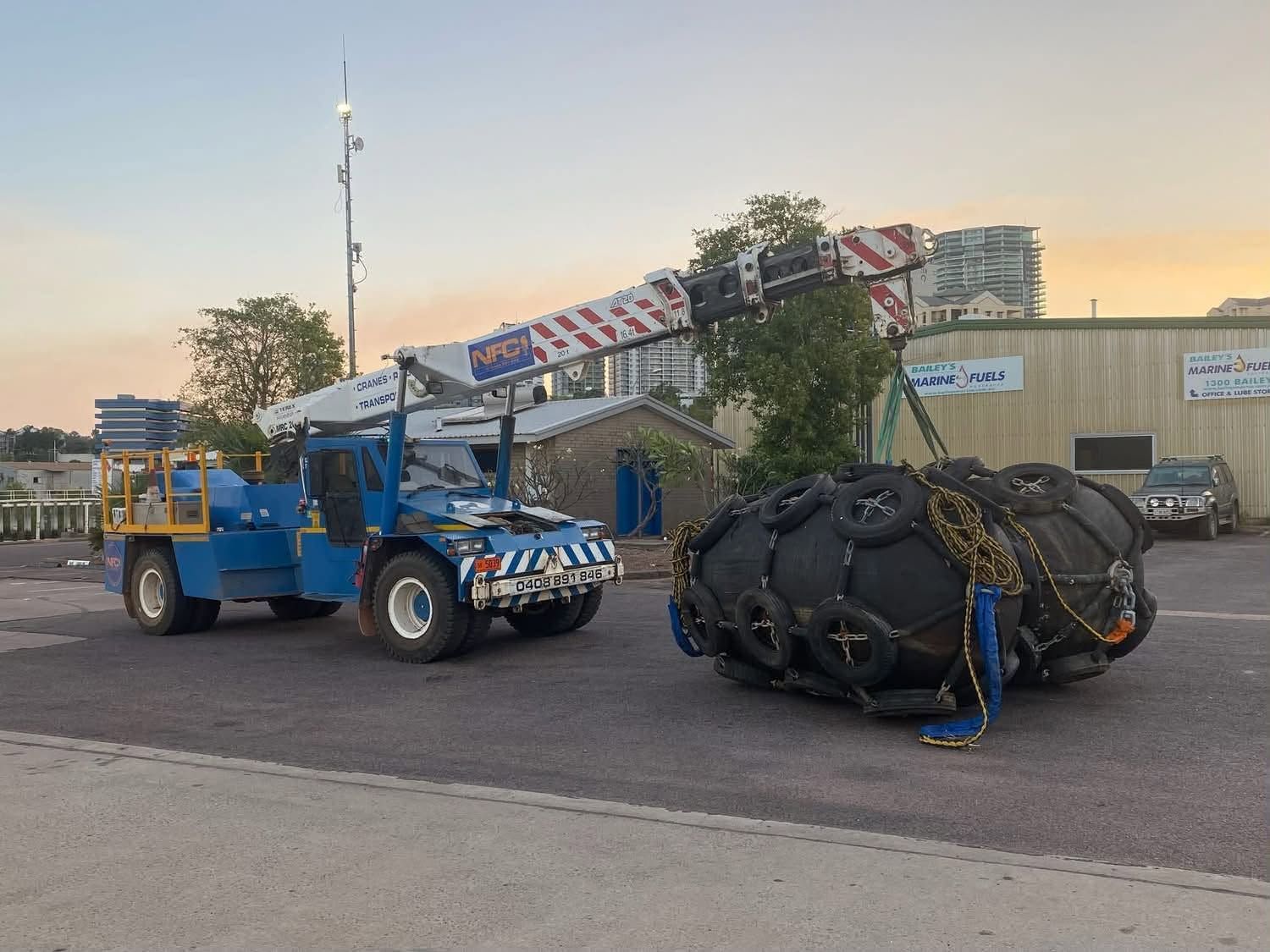
A Franna is a fundamentally different machine. It is a mobile, pick-and-carry crane that is designed to lift a load and travel with it — no outriggers, no stabilising legs, no extended setup footprint. The crane's stability under load comes from its own engineered chassis and counterbalance design rather than ground-mounted supports.
This means the Franna can enter a site, position itself, complete the lift and carry the load to its destination all within a significantly smaller operational envelope than a conventional crane requires. It can travel through standard gate openings, operate in internal spaces with limited clearance, and work in yards and driveways where setup space is constrained. For Darwin crane hire on restricted-access sites, this is a meaningful practical advantage.
Darwin Site Types Where This Matters
The Franna's pick-and-carry design is particularly relevant for a range of site types that are common across Darwin and Palmerston.
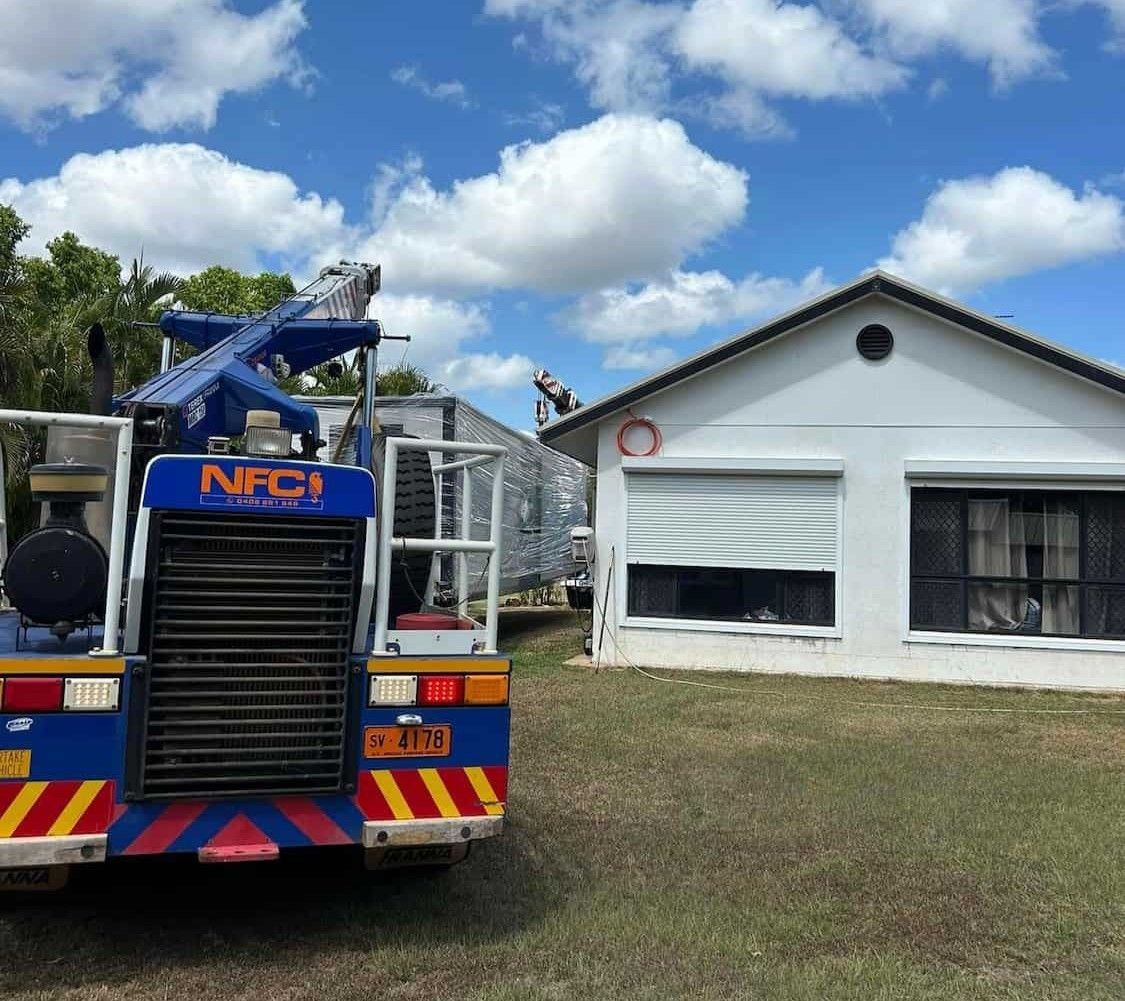
Terrace subdivisions and tight suburban blocks in Darwin's inner suburbs often have narrow driveway access, limited turning space and structures on multiple boundaries. A Franna can navigate these conditions and complete lifts — HVAC units, steel beams, prefabricated panels — that would otherwise require manual handling or expensive alternative methods.
Commercial warehouses with internal lift requirements are another common application. Where a rooftop or mezzanine lift needs to happen inside a building or within a constrained loading dock area, the Franna's compact footprint and ability to position precisely without outrigger deployment makes it the practical choice.
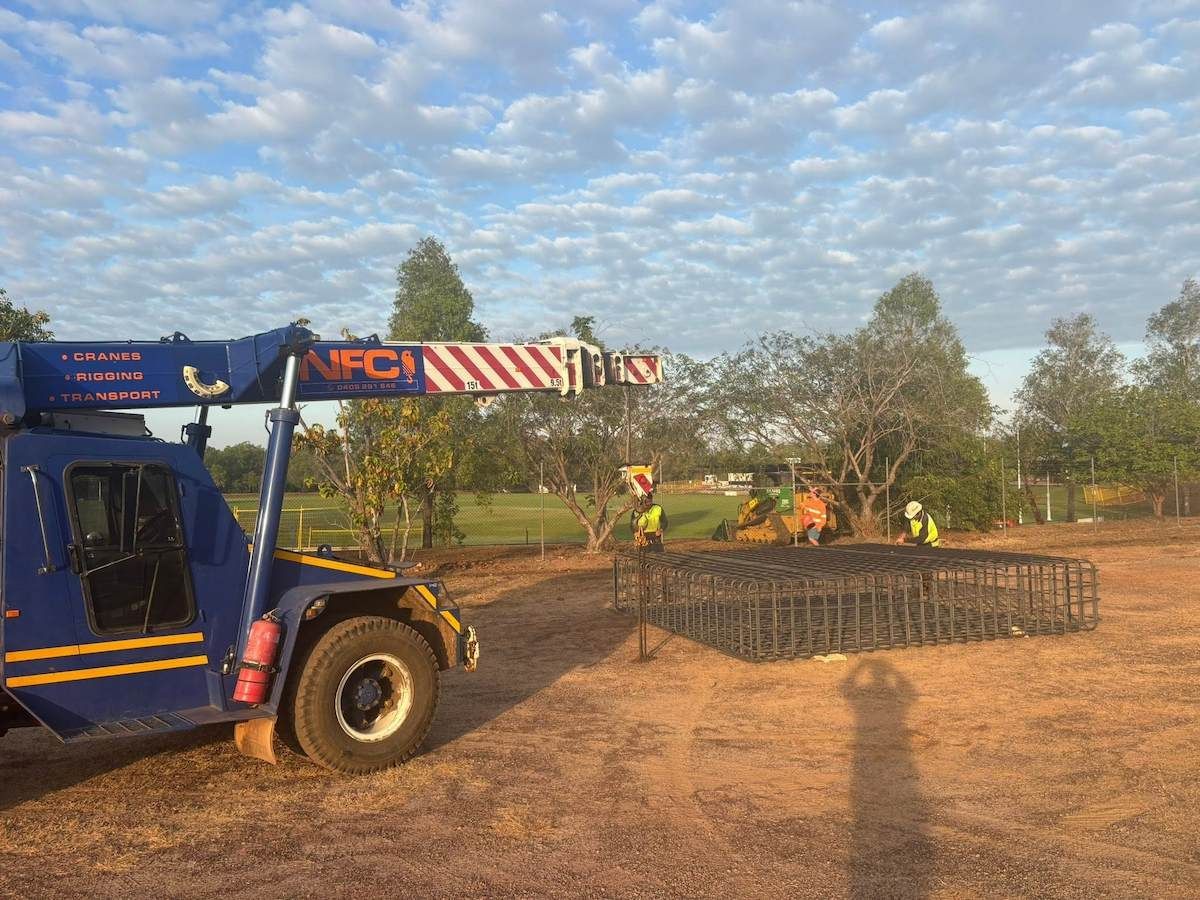
Industrial yards off the Stuart Highway, where equipment movement between bays or the installation of heavy plant needs to happen around existing infrastructure, are well suited to pick-and-carry operation. The ability to carry a load across a yard rather than requiring a fixed lift point removes a significant logistical constraint from these jobs.
What Restricted Access Actually Means in Practice
Not all restricted access situations are the same, and it is worth being specific about what the limitations actually are before assuming a lift cannot proceed. The relevant questions are straightforward: What is the width of the access point? What is the overhead clearance? Is the ground surface stable enough to support a loaded crane? How much space is available at the lift point itself?
A Franna requires a minimum access width that is considerably less than most conventional mobile cranes. It does not need a prepared hard stand for outrigger pads. It can work on compacted ground that would be unsuitable for a larger crane setup. In many cases, sites that appear too restricted are entirely workable once these specifics are assessed properly.
Load Capacity and What It Covers
The 15-tonne maximum lifting capacity of the Franna covers a wide range of commercial and industrial lift requirements. HVAC systems, steel structures, precast panels, shipping containers, water tanks, generators and heavy plant items all typically fall within this range. For builders and project managers assessing whether crane hire in Darwin is viable for a specific lift, the combination of 15-tonne capacity and pick-and-carry mobility covers a significant proportion of the jobs that arise on restricted-access sites.
Where a load exceeds this capacity, cross-hire through trusted local partners is an option worth discussing early in the planning process to avoid delays.
The Wet Season Factor
Darwin's wet season adds a layer of complexity to any outdoor lift operation that is worth planning for. Seasonal flooding, saturated ground and the logistical constraints that come with sustained heavy rainfall all affect access and ground conditions. The Franna's relatively low ground pressure compared to larger crane setups makes it more suitable for wet season operations where ground stability is a concern, though site-specific assessment is always required before committing to a lift in these conditions.
For time-sensitive commercial projects, planning lift schedules around the wet season calendar — or confirming feasibility for wet season operation early — reduces the risk of delays when the rains arrive.
Why a Site Visit or Consult Call Is All It Takes
The most common reason a restricted-access lift does not proceed is that the feasibility question never gets a proper answer. A builder or project manager assumes it will not work, does not make the call and finds a more expensive or labour-intensive alternative instead.
A brief site visit or a consult call with an experienced Darwin crane hire operator changes that. With the specifics of the site in hand — access width, ground conditions, lift point, load weight — a qualified operator can confirm whether the job is achievable, what the setup will look like and what the lift will cost. In most cases this takes less time than the workaround that gets used instead.
Not Sure if Your Site Is Workable? Let's Find Out
Northern Franna Cranes NT works with builders and project managers across Darwin, Palmerston and the broader NT on exactly these kinds of restricted-access situations. If you have a lift coming up and you are not sure whether crane hire in Darwin will work for your site, a consult call or site visit is the fastest way to get a clear answer. Get in touch today to discuss your site conditions and find out what is possible.