What Size Crane Do You Need? A Guide For Darwin Homeowners & Builders – Insights From Years In The Top End
When someone calls and asks “What size crane do I need?” the honest answer is always the same: it depends on the lift. After years working across the Top End—from residential backyards to commercial builds and remote project sites—one thing has become clear. Choosing the right crane isn’t about picking the biggest machine or the cheapest hire. It’s about selecting the crane that suits the access, the load, the ground conditions and the lift plan. If you’re searching for crane hire in Darwin, knowing the basics puts you a step ahead long before the crane arrives.
Darwin’s climate, soil types and building layouts play a huge role in crane selection. Local operators consider wind, humidity, tight driveways, soft ground after rain, prefabricated building components, and the need for reliable lifting in remote locations. This guide explains how we match the right crane to the job, the differences between crane types and what homeowners, builders and project managers should know before booking.
Start With the Load Weight — It Shapes Every Other Decision
The first thing operators look at is load weight. Whether it’s an air-con unit, steel beam, pool shell or roofing truss, the crane must be matched to the mass and distribution of the load. Weight also affects boom configuration, counterweights and the crane’s operating radius. Loads that appear light can put surprising demand on a crane once boom extension and swing angle are considered. Conversely, compact machines like frannas can safely lift much heavier loads than people expect—provided the radius is favourable. What weight affects on the lift:
- Boom length required
- Counterweight setup
- Ground pressures
- Whether a franna, mobile or all-terrain crane is appropriate
- How many crew members are needed for the lift
Accurate load details help prevent delays, re-quotes and unnecessary equipment changes.
The Radius Is Just as Important as the Weight
Many people imagine crane lifting capacity as a fixed number—but that number changes dramatically with radius. A 20-tonne crane lifting at a 2-metre radius behaves like a completely different machine at 12 metres. In Darwin suburbs, radius is often influenced by property boundaries, neighbouring houses, trees, patios and rooflines. Meanwhile, on construction sites or commercial projects, the radius changes depending on where the crane can safely set up. Radius determines:
- How high and how far the crane can reach
- Whether a larger crane is required
- How the crane is positioned on-site
- Whether the lift needs a dogman or rigging adjustments
Radius is often the real reason a job needs a larger crane, not load weight alone.
Franna Cranes: The Go-To for Tight Darwin Suburbs and Quick Lifts
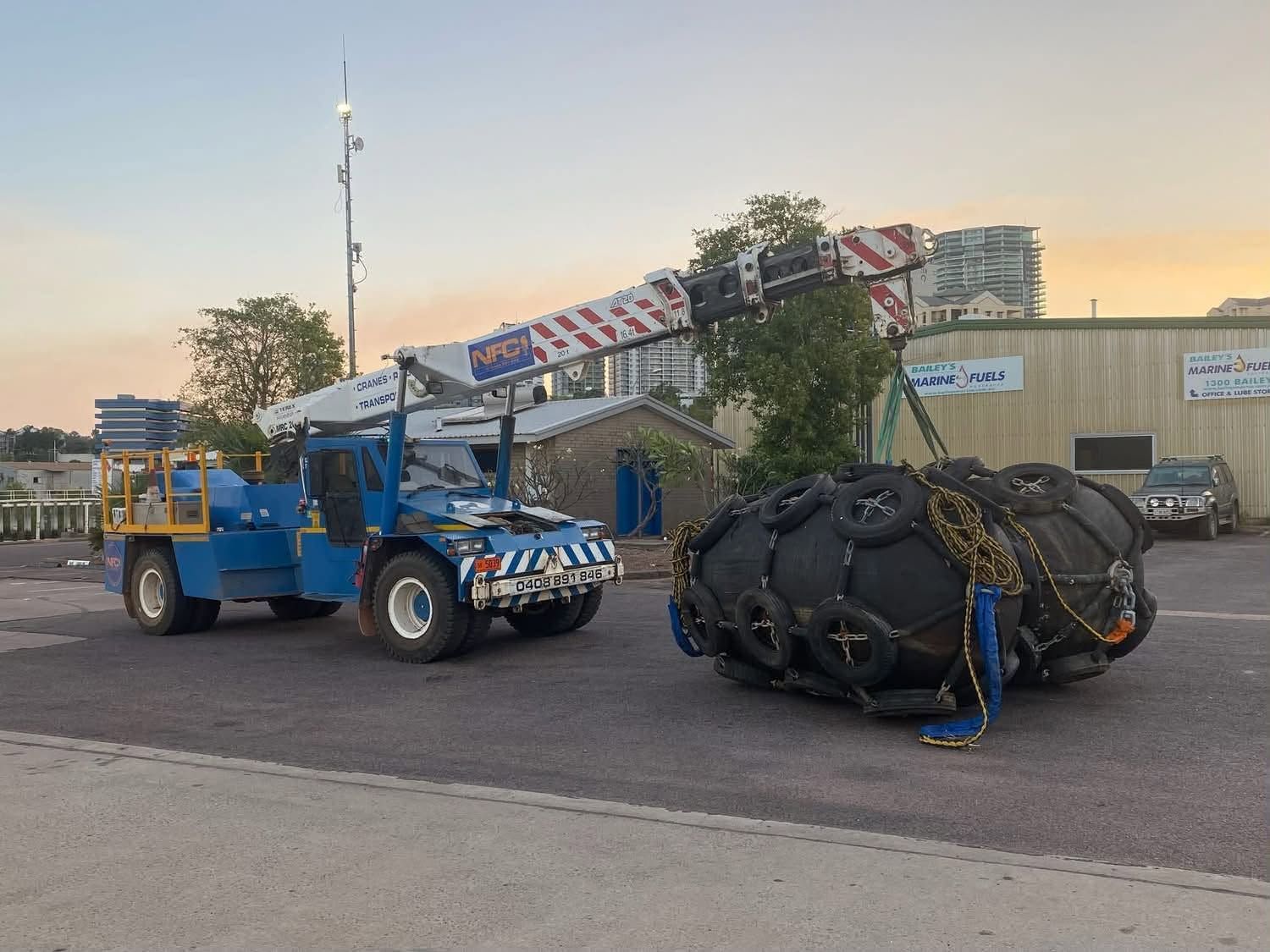
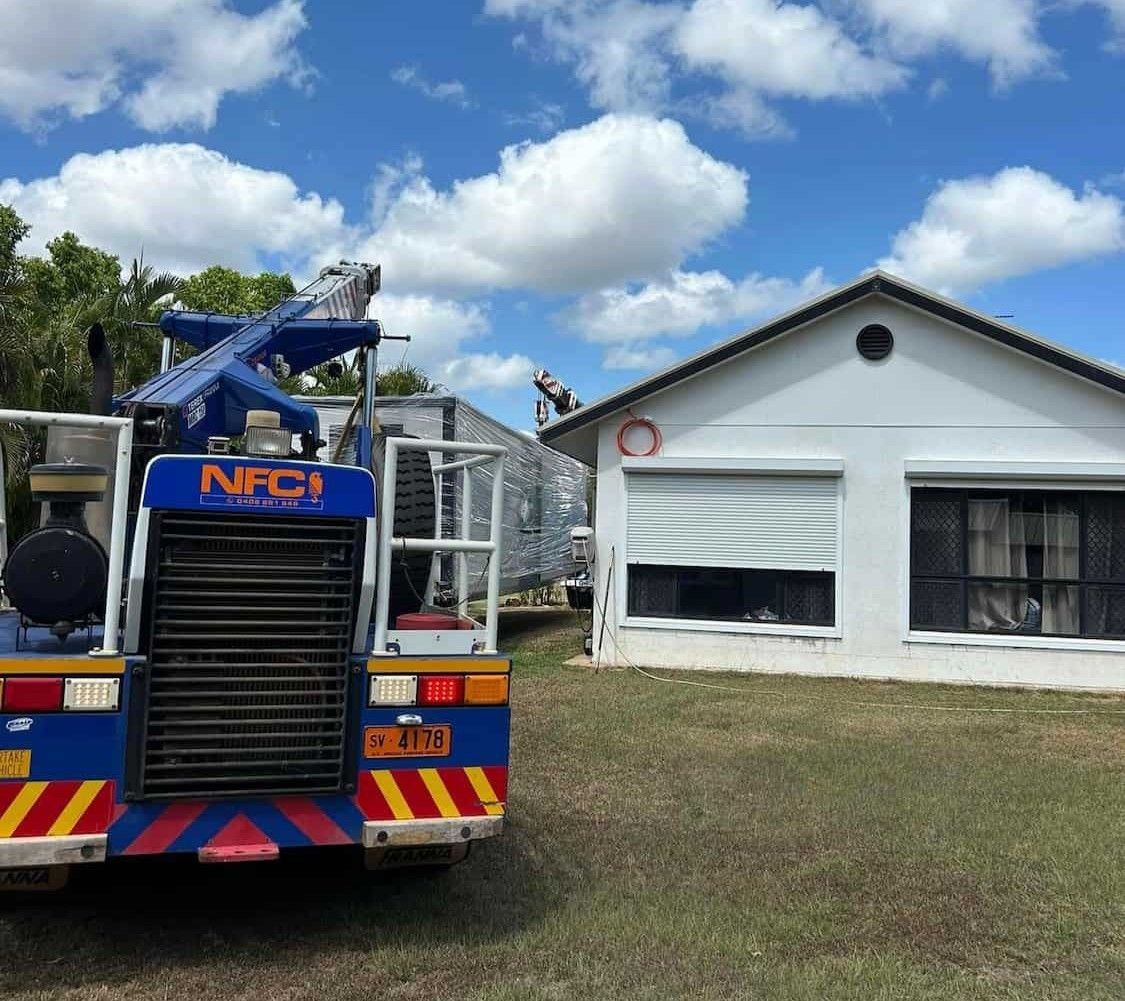
Frannas are some of the most versatile machines used in the Top End. These pick-and-carry cranes handle tight access, narrow streets and quick residential jobs with ease. They are ideal for lifting items and travelling short distances across site with the load. They’re especially suited for Darwin’s suburban conditions, where driveways can be narrow, access can be tight and ground conditions may vary. Franna cranes are ideal for:
- Air-conditioning units
- Pools and spas
- Household relocations (containers, heavy furniture, machinery)
- Structural steel on smaller sites
- Quick load repositioning
While they don’t have outriggers, they excel in mobility and speed, making them a preferred option for rapid, short-radius lifts.
Mobile Slew Cranes: When You Need Height and Reach
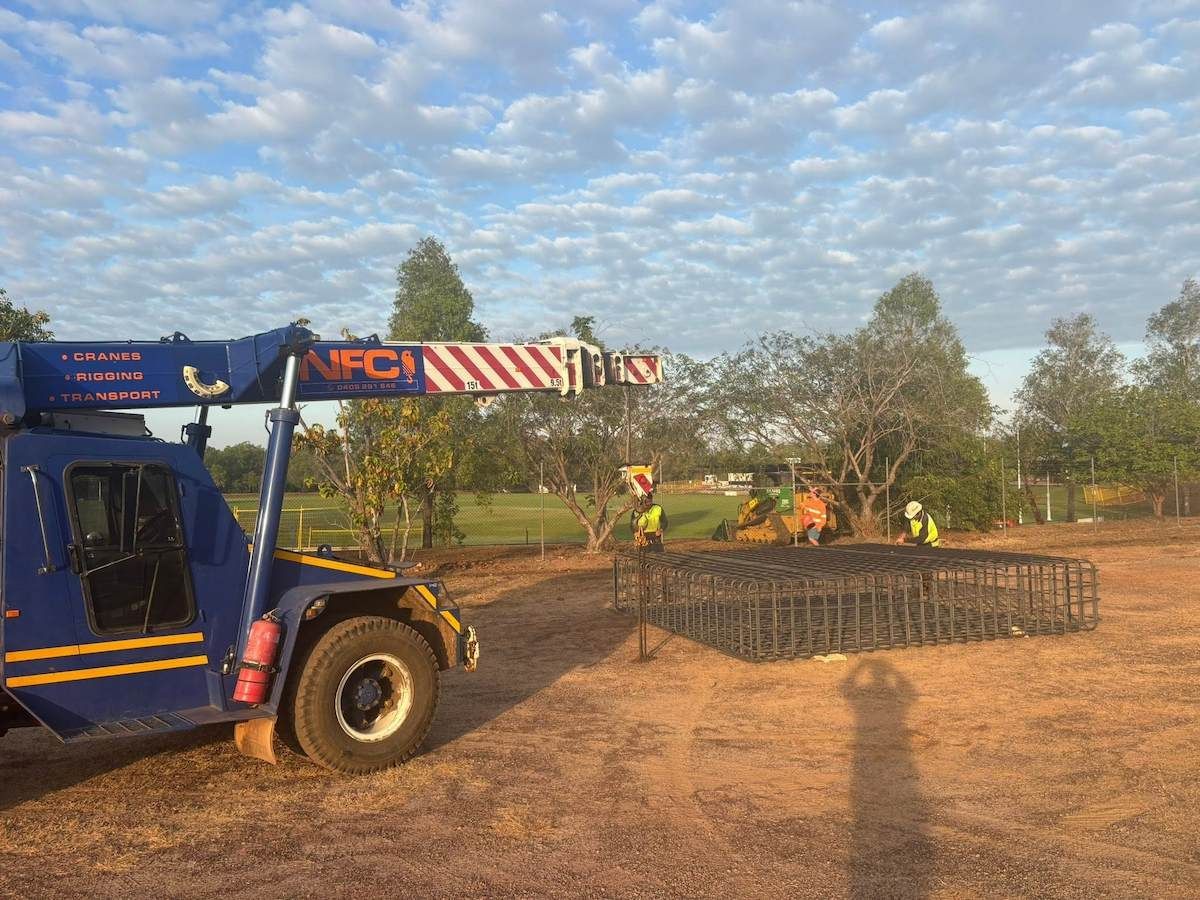
Mobile cranes offer greater reach and higher lifting capacities compared to frannas. They suit situations where the lift radius is large or where obstacles—such as fences, trees or multi-storey builds—make a straightforward pickup impossible. Their outriggers provide stability, making them more versatile for medium-duty construction and installation jobs. Mobile cranes are commonly used for:
- Multi-storey construction lifts
- Large structural steel placement
- Rooftop equipment
- Tree removal
- High or awkward installation angles
If height or reach is a major factor, a mobile crane is usually the right choice.
All-Terrain Cranes: Built for Mine Sites and the Top End’s Rough Access
For heavier lifts, remote access or industrial work, all-terrain cranes offer capacity, stability and mobility across challenging ground conditions. They are designed for long travel distances, uneven terrain and weather changes common to the Top End. These cranes are built for reliability—critical for shutdown work, plant maintenance and remote mining operations where delays cost time and money. All-terrain cranes are ideal for:
- Mine-site maintenance
- Transportable building installations
- Heavy industrial equipment
- Long-distance travel between remote locations
- Lifts requiring high capacity and long reach
This is where Darwin crane hire frequently steps into the mining and industrial space.
Site Access and Ground Conditions Can Change the Crane You Need
One of the biggest surprises for homeowners and builders is how much the crane size depends on access—not just load requirements. A load that a smaller crane could lift might become a job for a larger machine if the only available setup point is further away. Darwin’s wet season, sandy soils and tropical downpours can also change ground stability overnight. Key access factors include:
- Driveway width and slope
- Proximity to structures
- Ground compaction and moisture levels
- Height restrictions (carports, tree branches, eaves)
- Space available for setting outriggers
Good operators will request photos or conduct a site visit to prevent surprises on the day.
Weather and Wind Matter — Especially in the Top End
Operators in the Northern Territory work under strict wind restrictions. Even if the lift appears simple, high winds can stop a job immediately. The Top End experiences sudden gusts, humidity shifts and seasonal storms that influence crane configuration and timing. This is where experience matters—knowing when conditions are safe and how to plan lifts around Darwin’s weather patterns. Weather impacts include:
- Reduced lifting capacity at high wind speeds
- Limited boom extension in gusty conditions
- Delays during monsoon rain
- Extra care for lifts requiring precision placement
Safety always comes first, and adjustments may be required to match conditions on the day.
The Most Common Crane Sizes Used in Darwin Projects
While every job is different, certain sizes appear frequently in residential and commercial Darwin lifting work. You’ll see operators recommending:
- Franna cranes (15–25T) — for suburban lifts, quick turnarounds
- Mobile cranes (20–60T) — for mid-sized construction and installation jobs
- All-terrain cranes (60–100T+) — for heavy industrial, remote, and mine-site lifts
These ranges cover the majority of real-world work across the region. For larger mine or shutdown projects, capacities can increase significantly, but the key principle remains the same: match the crane to the lift radius, access conditions and load characteristics.
Arrange a Crane
Selecting the right crane is a combination of load weight, radius, access, ground conditions and weather—all crucial factors that experienced operators assess before recommending equipment. When working in Darwin’s climate and construction environment, practical experience matters just as much as the technical specs. Whether you’re lifting roof trusses in a suburban street or placing heavy machinery on a remote mining site, choosing the right crane saves time, reduces downtime and ensures safety from the first setup to the final placement.
At Northern Franna Cranes NT, we help homeowners, builders and project managers choose the right crane for their lift—whether it’s a quick suburban job or a remote heavy-duty project. Our team understands local conditions and provides reliable crane hire in Darwin services shaped by years of hands-on experience across the Top End. Contact us today!